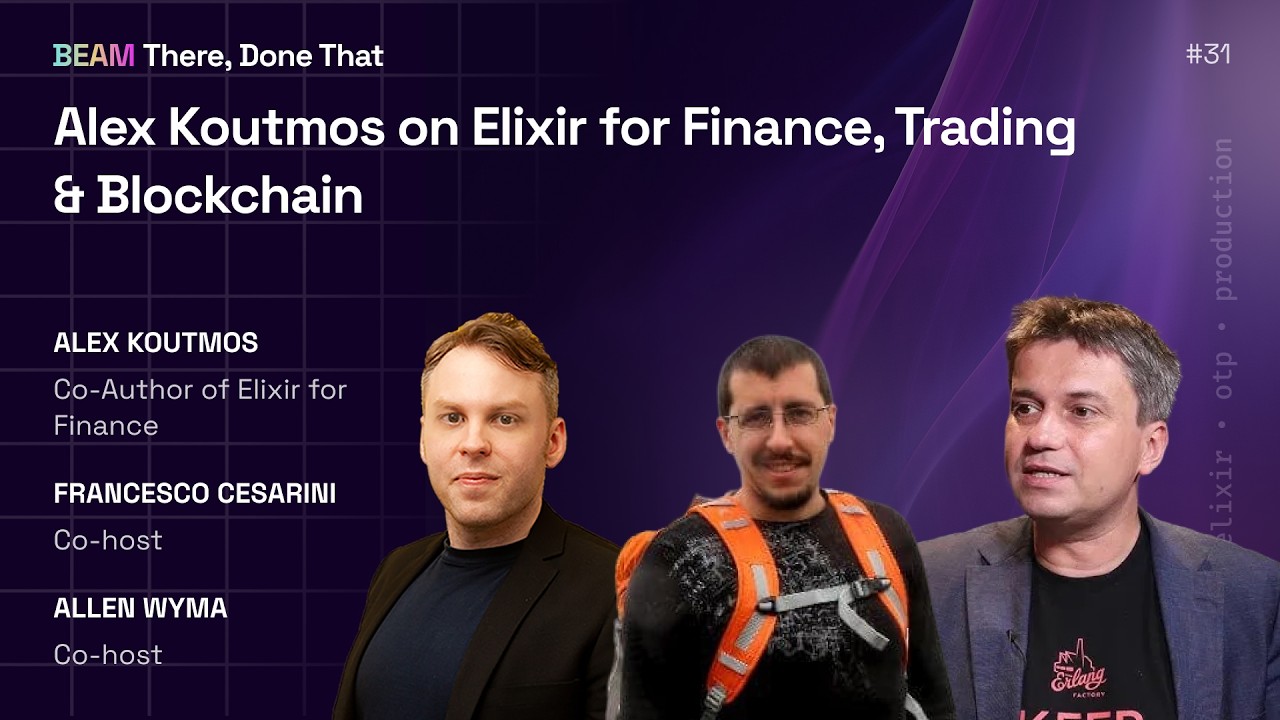
New episode with Alex Koutmos covering the overlap between Elixir and financial systems - practically, architecturally, and historically.
The toolchain breakdown for anyone building in this space:
Explorer is an Elixir wrapper around Polars (Rust), not a pure Elixir data frame library. When you call Explorer for data analysis, you’re calling fast Rust under the hood. The BEAM orchestrates; Polars computes.
NX delegates to native or GPU backends. The José Valim “500x faster” tweet was teasing NX - the answer was delegating to the GPU.
Livebook becomes a full quant workbench when you combine these: fetch data, run analysis, backtest a strategy, visualize results, without leaving Elixir.
The ledger/let-it-crash interaction is worth understanding: the process is cheap. The truth lives in durable storage outside the process - an event log, Oban queue, or database. A crash restarts the process; the ledger is untouched. This is what “let it crash” means in a financial context.
Companies like Brex, Klarna, and JP Morgan use the BEAM in finance and typically don’t publicize it. BlockScout (Ethereum explorer) is in Elixir. Aeternity is in Erlang.